
Case study
Rogri
A move from the Luma theme to Hyvä for a B2B packaging store, with the design kept pixel for pixel.
What we delivered
- Ecommerce
- Development
A project delivered by the VONTEQ team. Ask us for the figures and how we got to them.
A B2B store selling packaging, boxes and courier consumables. We moved it from the stock Magento theme (Luma) to Hyvä, without changing the design its customers were already used to.
A store that worked, but carried a ten-year-old frontend
Rogri didn't have a design problem. It had the problem every Magento store still on the stock theme has: the Luma frontend loads Knockout.js, RequireJS and jQuery before it paints anything on screen. For a B2B store, where the same customer comes back to order several times a month, every extra second adds up.
- The Luma stack: Knockout.js, RequireJS, jQuery, LESS
- A large catalogue, with repeat orders from the same customers
- A design customers knew — we didn't want to lose it
Platform before
Magento 2, Luma theme
The web archive of the homepage from 14 September 2024 contains 25 references to RequireJS/Knockout and none to Hyvä.
Platform after
Magento 2 + Hyvä
The archive from 5 October 2024 contains Hyvä markup and no reference to the Luma stack.
Launch window
September–October 2024
There is no other capture between the two archive snapshots above.
Design changes
effectively none
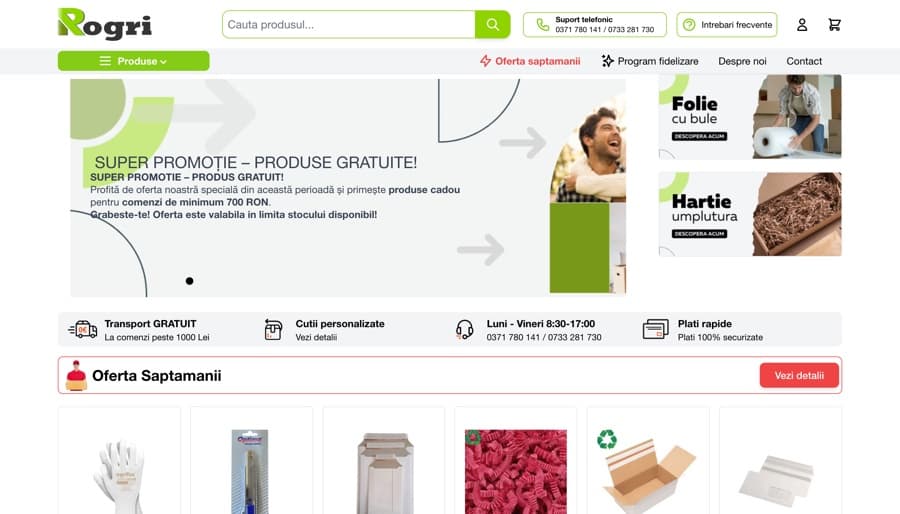
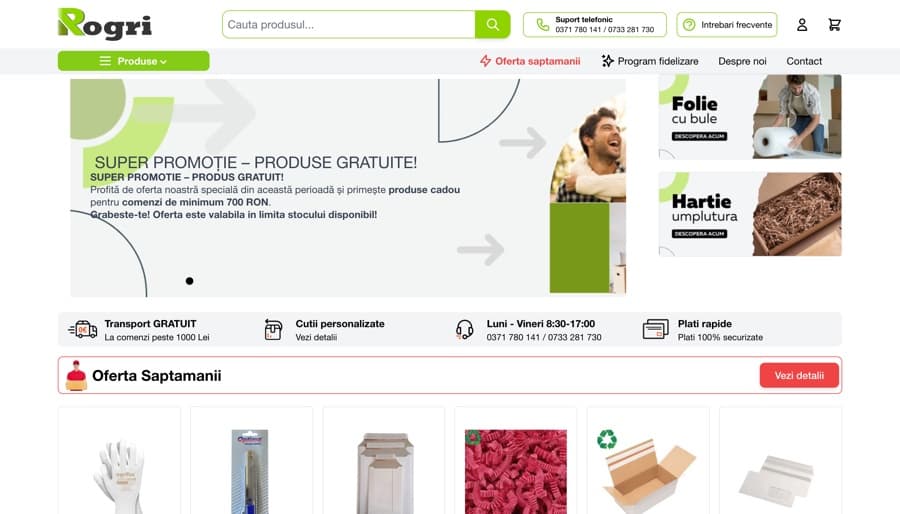
A pixel-by-pixel comparison between the archived before-capture and today's store matches completely, apart from a rotating banner.
Before and after
How it looked, and how it looks
Yes, they're almost identical. That's the result, not an oversight: migrating to Hyvä doesn't force a redesign. The client changed the engine, not the shopfront.
- Knockout.js
- RequireJS
- jQuery
- LESS
- Alpine.js
- Tailwind CSS
14 September 2024 — Magento 2 on the Luma theme
- Knockout.js
- RequireJS
- jQuery
- LESS
Today — Magento 2 on Hyvä
- Alpine.js
- Tailwind CSS
How we worked
The project stages
Audit
An inventory of the extensions that touch the frontend
Before a line of code, we listed every extension that renders anything on the page and marked, for each, whether a Hyvä-compatible version exists, whether it needs porting, or whether it can go. This is where you find out whether the migration is six weeks or fourteen.
Rebuild
Same design, new engine
We rebuilt the components in Alpine.js and Tailwind, following the existing design pixel by pixel. That was deliberate: the client had a store that sold, and a redesign running alongside a technical migration mixes two risks and makes it impossible to say which change produced which effect.
SEO parity
URLs, redirects, structured data
We kept the URL structure and checked canonicals, product structured data and the sitemap before launch. A frontend migration shouldn't touch Google rankings at all — but it does, if nobody checks.
Launch
Switching over without stopping sales
The store stayed live throughout. The work ran in parallel and the switch happened in a low-traffic window, with the old version ready to take back over immediately.
What's still to come in this case study
We would rather say what we haven't measured yet than put up a number we can't stand behind. Coming, with a date and a method:
- Mobile PageSpeed score, before and after, with the measurement date
- Conversion rate over three months before versus three months after
- The actual project duration, in weeks

- Phone
- 0723 296 296
- contact@vonteq.ro
- Offices
- Headquarters — Bucharest
Strada Samuil Vulcan 12D, Bucharest, RomaniaSales office — Dubai
46 Al Marsa St, Dubai, UAE